India’s ‘Food Mafias- You probably think you are giving your family a healthy start to the day with a glass of packaged fruit juice and a ketchup-slathered sandwich. In reality, you might be serving them a carefully engineered chemical cocktail of liquid sugar, artificial dyes, and a negligible fraction of real nutrition. Welcome to the shadowy underbelly of India’s fast-moving consumer goods (FMCG) industry—a multi-billion-dollar empire that one lone social media creator is trying to bring down, at immense personal risk.
For decades, Indian consumers have blindly trusted the brightly colored packages lining supermarket shelves. We have bought into the marketing narratives of “100% natural,” “immunity-boosting,” and “farm-fresh.” But a new wave of digital whistleblowers is tearing off these deceptive labels, revealing a terrifying truth: many of our daily dietary staples are ultra-processed chemical constructs that offer zero nutritional value and, worse, harbor ingredients linked to severe, long-term health hazards, including cancer.
At the forefront of this digital rebellion is Damit Gahlot, the man behind the wildly popular social media handle @foodreality07. Armed with nothing but a smartphone and a basic understanding of nutritional science, Gahlot has declared war on what he terms the “food mafias” of India. But his crusade for transparency has come at a steep price, triggering an avalanche of legal notices, intimidation tactics, and veiled threats from corporate giants desperate to protect their bottom lines.
Here is the inside story of India’s deceptive food industry, the regulatory blind spots allowing it to thrive, and the heavy price of telling the truth.
The Illusion of Health: Decoding the Supermarket Deception
To understand why Gahlot is facing such severe backlash, one must first look at what exactly he is exposing. The videos on @foodreality07 follow a simple but devastatingly effective format: Gahlot picks up a popular, household-name food product, flips it over, and reads the fine print on the ingredient list—translating complex chemical jargon into plain English (and Hindi) for the average consumer.
The findings are consistently alarming. What is marketed as wholesome food is often a masterclass in legal deception.
- The Tomato Ketchup Myth: Walk into any Indian home, and a bottle of tomato ketchup is a staple. Advertisements show plump, red tomatoes being squeezed into bottles. Gahlot’s deep dives, however, reveal a different story. Many leading ketchup brands contain as little as 4% to 9% actual tomato paste. The remaining 90-plus percent? A hyper-palatable slurry of water, massive amounts of liquid sugar, high fructose corn syrup, thickening agents (like modified starch), and chemical preservatives. You are not eating a vegetable; you are eating a tomato-flavored sugar syrup.
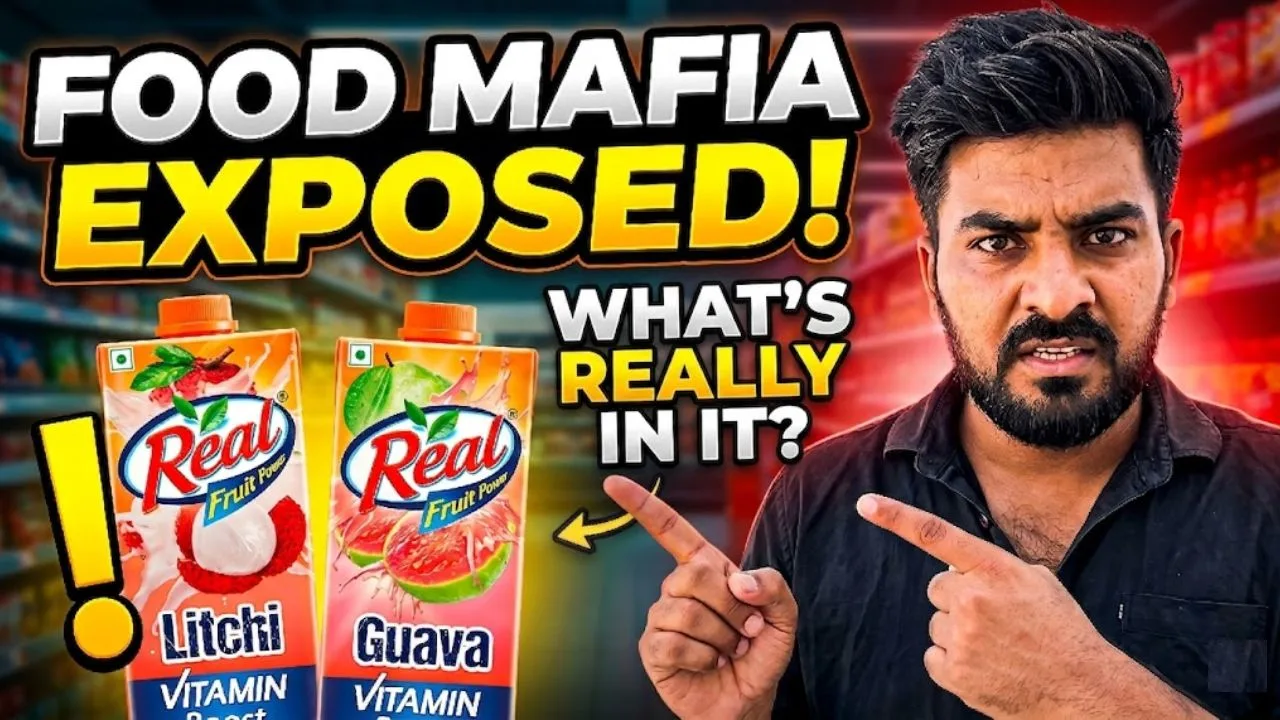
- The “Real” Juice Paradox: Perhaps the most shocking exposures revolve around packaged fruit juices. Brands that use words like “Real” in their naming conventions create a powerful “health halo.” Consumers buy these for sick children or aging parents, believing they are serving liquid health. In reality, as Gahlot points out, many of these “juices” are legally classified as “fruit beverages” or “fruit drinks.” They often contain a mere 5% to 10% reconstituted fruit juice. The rest is water, refined sugar, artificial fruit flavors, and synthetic food colors. The brand name itself is a psychological trick—the word “real” is merely a registered trademark, not a description of the ingredients.
A Toxic Cocktail: The Cancer Connection
The problem extends far beyond mere false advertising. The ingredients substituting actual food in these products carry severe, long-term public health implications.
Gahlot’s investigations frequently highlight the presence of controversial food additives. To extend shelf life and enhance taste, food mafias pump products with Class II preservatives (like Sodium Benzoate), artificial emulsifiers, and synthetic colors (like Tartrazine or Sunset Yellow).
Mounting global medical research has linked the heavy consumption of ultra-processed foods (UPFs) to a host of chronic diseases. The high glycemic index of hidden sugars is a direct contributor to India’s skyrocketing diabetes rates—the country is currently grappling with over 100 million diabetic adults. Furthermore, certain artificial sweeteners, emulsifiers, and synthetic dyes, when consumed in high quantities over years, have been flagged by international health bodies for their potential carcinogenic (cancer-causing) properties.
By substituting natural ingredients with cheap, synthetic alternatives, brands are legally selling products that gradually deteriorate the metabolic health of the consumer.
The FSSAI Enigma: Why is the Watchdog Sleeping?
A recurring question in Gahlot’s videos, and among his lakhs of outraged followers, is simple: If this food is essentially poison, why is the government allowing it to be sold?
The Food Safety and Standards Authority of India (FSSAI) is the apex regulatory body tasked with ensuring the safety of food in the country. However, the system is riddled with loopholes that billion-dollar corporations expertly navigate.
- Permissible Limits vs. Cumulative Consumption: FSSAI sets “permissible limits” for chemicals and sugar in individual products. Brands ensure their single serving falls just under this legal limit. However, the regulator fails to account for the cumulative effect. An average Indian child might consume a packaged juice in the morning, ketchup with snacks in the evening, and packaged biscuits at night—ingesting a toxic load of preservatives and sugar that far exceeds daily safe limits.
- Lobbying Against Front-of-Pack Labeling (FOPL): For years, health advocates have demanded a clear warning system on the front of packages—like a red stop sign for high sugar, salt, or fat—similar to regulations in countries like Chile. However, heavy lobbying by the FMCG sector has repeatedly stalled aggressive FOPL regulations in India. Instead, brands are allowed to hide the ugly truth in microscopic, unreadable text on the back of the package.
- The “Proprietary Food” Loophole: Many highly processed items are registered under the vague category of “proprietary foods,” allowing brands more leeway in their ingredient compositions compared to standardized food items.
As Gahlot’s exposés highlight, the FSSAI’s current framework allows companies to be technically legally compliant while remaining morally bankrupt and nutritionally devoid.
ALSO READ
From Food Delivery to Brain Tech: Deepinder Goyal’s Neurotech Wearable ‘Temple’ Raises $54 Million
David vs. Goliath: The Price of Speaking the Truth
When you disrupt a multi-billion-dollar industry, the industry strikes back. For Damit Gahlot, the transition from a helpful social media creator to public enemy number one for the FMCG sector happened overnight.
As @foodreality07’s videos began going viral—garnering millions of views and prompting consumers to leave angry comments on the official pages of major brands—the “food mafias” deployed their standard defense mechanism: corporate intimidation.
Gahlot is currently facing a barrage of aggressive pushback:
- Legal Notices and SLAPP Suits: Massive corporations with bottomless legal budgets are serving Gahlot with cease-and-desist orders and defamation notices. These are classic SLAPP tactics (Strategic Lawsuits Against Public Participation), designed not necessarily to win in court, but to drain the financial and emotional resources of the whistleblower until they are forced to self-censor.
- De-platforming Attempts: Brands frequently mass-report his content on Instagram and YouTube, claiming copyright infringement or “misinformation,” temporarily taking down his videos to stifle their reach.
- Veiled Threats: Beyond the boardroom, creators operating in this space often face organized online trolling, doxxing, and even physical threats from shadowy entities with vested interests in the supply chain of these products.
For a solo creator, fighting a conglomerate that employs an army of lawyers and PR executives is an agonizingly isolating experience. The legal notices are designed to induce fear—threatening damages worth crores of rupees that a regular citizen could never pay in a lifetime.
How to Spot the Fakes: A Consumer’s Survival Guide
The battle Damit Gahlot is fighting proves that consumers cannot rely solely on corporate ethics or regulatory bodies to protect their health. The only defense against the food mafia is an educated consumer base.
Here is how you can protect yourself and decode the deceptive labels in your supermarket aisle:
- Ignore the Front, Read the Back: The front of the package is a billboard designed by marketers to manipulate you. The truth only lives in the ingredient list on the back.
- Understand the ‘Order of Ingredients’: By law, ingredients must be listed in descending order of weight. If sugar, liquid glucose, or high fructose corn syrup are in the first three ingredients, you are buying a dessert, not a healthy food.
- Beware of the Aliases of Sugar: The food mafia hides sugar under dozens of different names to avoid listing it first. Look out for maltodextrin, dextrose, invert syrup, liquid glucose, and fruit juice concentrate.
- The ‘Grandmother Test’: As a general rule of thumb, if the ingredient list contains a long list of chemical names, INS numbers (e.g., INS 211, INS 110), and words your grandmother wouldn’t recognize as food, put the product back on the shelf.
The Verdict: A Call for Accountability
The saga of Damit Gahlot and @foodreality07 is more than just a story about a social media influencer; it is a critical pivot point in India’s public health narrative. For too long, powerful FMCG brands have operated with impunity, filling our grocery carts with disguised junk food while hiding behind slick advertising campaigns and slow-moving regulatory bureaucracies.
The fact that a citizen journalist is facing legal harassment merely for reading the back of a package aloud is a damning indictment of the processed food industry. It shows that these companies are terrified of an educated consumer.
Your Takeaway: The ultimate power to break the monopoly of these “food mafias” does not lie in the courtroom; it lies in your wallet. Every time you purchase a genuinely healthy, locally sourced product over an ultra-processed, artificially colored fake, you cast a vote against corporate deception.
We must stand behind whistleblowers like Damit Gahlot who are risking their livelihoods to protect our health. Start turning the packages around. Start questioning the brands you blindly trust. Demand stricter regulations from the FSSAI. It is time to reclaim our plates, because the cost of ignorance is no longer just money—it is our health, our longevity, and the future of our children.