Physics Wallah UPSC Controversy- Every year, lakhs of young Indians chase one of the country’s most prestigious dreams — clearing the UPSC Civil Services Examination. In that pursuit, many families invest significant money into coaching institutes, believing these programs will improve their chances in one of the world’s toughest exams.
But when the final results are announced and institutes begin celebrating hundreds of “selections,” an uncomfortable question emerges:
Whose success are these institutes actually claiming?
A recent controversy surrounding Physics Wallah and its founder Alakh Pandey has brought this long-standing question back into the spotlight.
The debate may appear to be about one institute, but it exposes something much larger — the marketing mechanics of the entire UPSC coaching industry.
The Physics Wallah Debate: Looking Beyond the Headlines (Physics Wallah UPSC Controversy)
The controversy began after Physics Wallah claimed around 200 selections in the UPSC Civil Services Examination cycle.
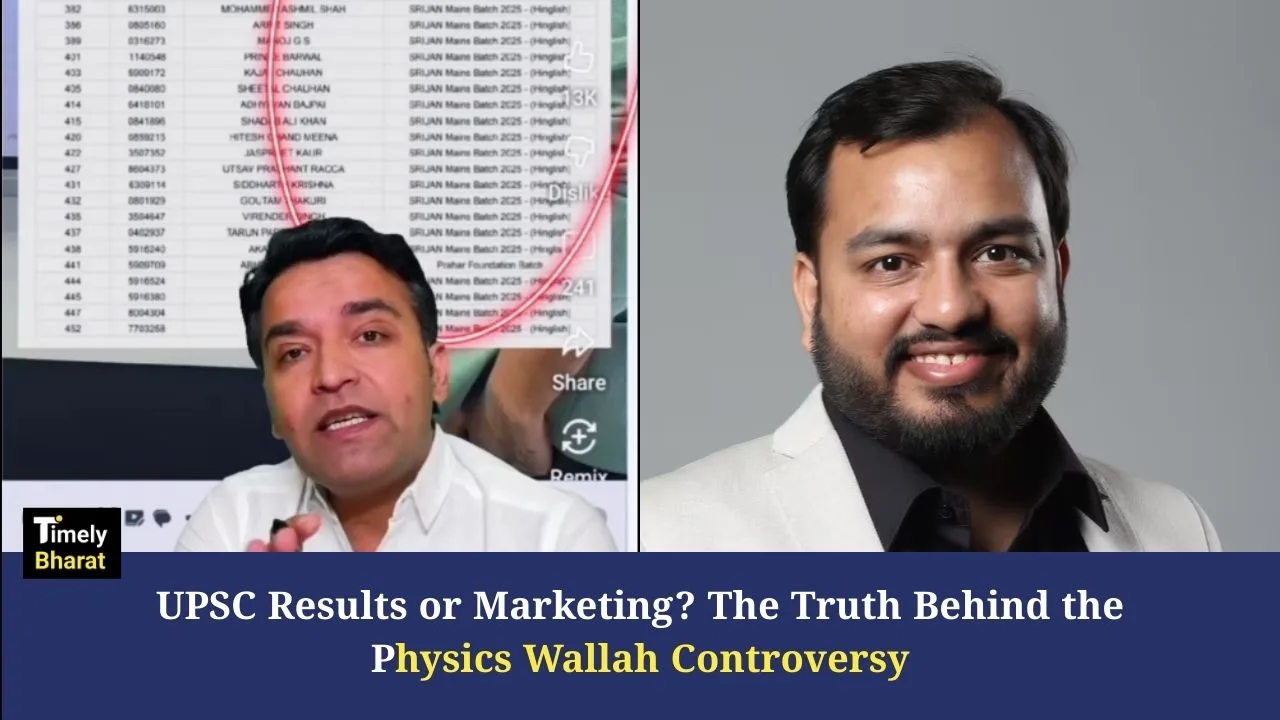
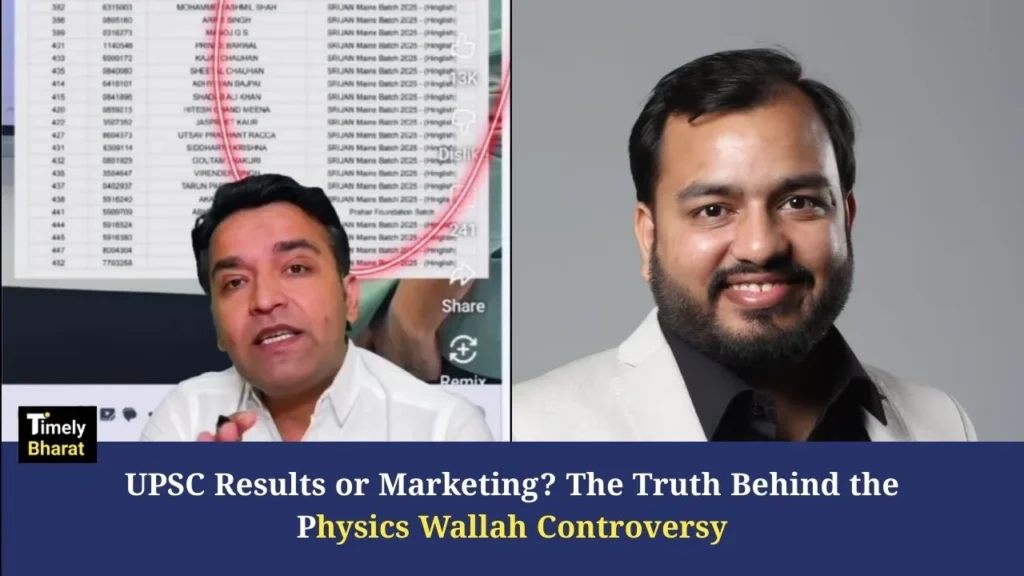
However, Gurugram-based UPSC educator Amit Kilhor later examined a PDF that appeared in Pandey’s response video and raised several questions about the data.
According to his analysis:
- Out of the ~200 selections claimed, nearly 190 students were associated with the “Srijan Mains 2025” batch.
- The Srijan program is a free guidance initiative, offered to students who have already cleared the UPSC Preliminary exam.
- Only around nine candidates appeared to come from PW’s long-term paid foundation batches, such as Prahar, Prarambh, Sankalp, and Titan.
Another point of confusion raised was that the dataset shown in the video reportedly began from entry number 101, leaving questions about the missing entries between 1 and 100.
If these observations are accurate, the issue is not simply about one institute exaggerating results.
It highlights a common industry practice that has existed for years.
The Business Model Few Aspirants Understand
The UPSC coaching ecosystem operates through a multi-layered strategy that combines education with aggressive marketing.
At its core, the model works like this:
1. Foundation Courses Generate Revenue
Most institutes sell comprehensive foundation programs costing anywhere between ₹50,000 and ₹2.5 lakh.
These long-term courses are the primary source of revenue and are marketed heavily to beginners preparing for the exam.
2. Free Programs Attract Proven Talent
Once the UPSC Preliminary results are declared, institutes launch free or heavily discounted programs such as:
- Mains answer-writing guidance
- Test series
- Mock interview programs
These initiatives target students who have already cleared the toughest elimination stage of the exam.
3. The Overlap Effect
Serious aspirants often enroll in multiple mock interview programs across different institutes to improve their preparation.
As a result, a single high-ranking candidate may interact with several coaching institutes during the final stages of preparation.
4. The Claim Game
When the final results are declared, every institute that interacted with that student — even briefly — may feature them in their selection list.
The outcome is predictable:
One successful ranker can end up being claimed by multiple coaching institutes at the same time.
Regulators Are Beginning to Notice
This marketing practice has increasingly drawn attention from regulators.
India’s Central Consumer Protection Authority (CCPA) has already taken action against several coaching institutes for misleading advertisements and exaggerated claims about selections.
Some recent penalties include:
- Vision IAS — ₹11 lakh fine
- Vajirao & Reddy — ₹7 lakh fine
- StudyIQ — ₹7 lakh fine
- Edge IAS — ₹1 lakh fine
The core issue identified by regulators is selective disclosure.
If institutes promote a topper’s result without clearly stating whether that student was part of a full paid course or only attended a short mock interview program, the advertisement can mislead aspirants.
The Transparency Problem
The real challenge is that the UPSC coaching industry operates with very little standardized reporting.
Most institutes publish selection PDFs and marketing posters, but rarely provide deeper data such as:
- How many students enrolled in their paid foundation courses
- How many of those students cleared Prelims, Mains, and the final list
- The long-term success rate of their core faculty
Without this transparency, aspirants are often forced to make expensive decisions based on marketing optics rather than verified outcomes.
What Aspirants Should Actually Ask
Before enrolling in any UPSC coaching program, aspirants should move beyond billboard advertisements and ask a few critical questions.
For example:
- How many students from your paid foundation batch cleared the final UPSC list last year?
- What is the track record of your primary faculty over the last five years?
- Do your claimed results include students who only attended short-term guidance programs?
Clear answers to these questions reveal far more about an institute’s effectiveness than a long list of names in a promotional PDF.
The Real Reform Needed
The recent debate involving Physics Wallah should not be seen as an isolated controversy.
Instead, it should trigger a broader conversation about transparency in the coaching industry.
UPSC is an examination designed to identify administrators who will govern a nation of over a billion people.
Ironically, the ecosystem built around preparing for this exam often lacks the transparency and accountability that the exam itself demands.
Until coaching institutes adopt clearer reporting standards — and students begin demanding them — the industry’s selection numbers will remain as much a marketing strategy as a measure of academic success.
ALSO RAED From Food Delivery to Brain Tech: Deepinder Goyal’s Neurotech Wearable ‘Temple’ Raises $54 Million