The American dream for a young Indian tech professional often begins with a single, highly-sought-after document: the H-1B visa. But for a generation of ambitious young women in India, that dream just got a lot more expensive—and possibly out of reach. In a landmark policy shift, the U.S. has imposed a new, staggering $100,000 fee on all new H-1B visa petitions, a move widely seen as one of the most significant changes to the program in decades. While the policy will impact the entire talent pipeline from India, which makes up over 70% of H-1B visa recipients, its effects will be felt most acutely by young Indian women.
What Exactly Is Changing?
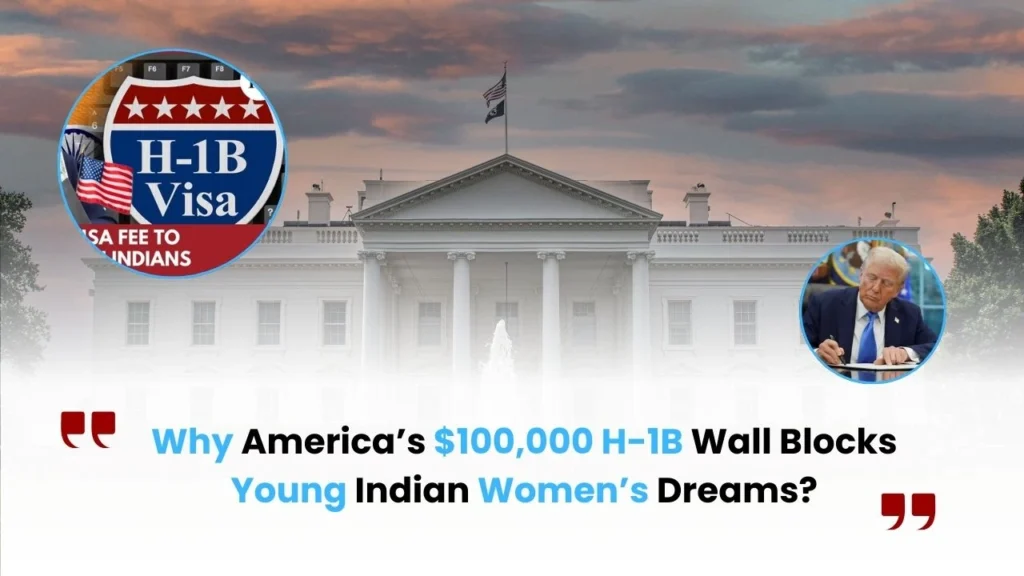
On September 21, 2025, a new executive order signed by President Trump went into effect, requiring a one-time fee of $100,000 to be paid by employers for every new H-1B petition. This is a dramatic escalation from the previous fees, which ranged from a few thousand to just over $10,000.
The new fee applies only to new visa applicants, not to renewals or existing H-1B holders. This change is paired with stricter wage requirements and increased scrutiny on applications, all of which are designed to funnel visas toward the most elite, high-earning foreign talent.
For Indian IT giants that hire thousands of engineers annually for U.S. contracts, and for U.S. tech companies like Amazon and Microsoft that rely heavily on H-1B talent, this policy represents a monumental financial hurdle. But the ripple effect goes far beyond corporate balance sheets, threatening to reverse years of progress in gender diversity.
A Disproportionate Impact on Indian Women in STEM
While men have historically dominated the H-1B visa pool, with women making up a much smaller percentage of recipients, recent years have shown a positive trend. More young women in India are pursuing STEM degrees and seeking opportunities abroad. The new policy, however, is a direct hit to this emerging cohort.
- The Sponsorship Squeeze: With a $100,000 price tag, employers will be far less likely to sponsor junior or entry-level positions. This is a critical blow for young women who are typically at the start of their careers and rely on these initial opportunities to build a foothold in the U.S. tech sector. Companies will now prioritize only top-tier, senior, or specialized roles, effectively shutting the door on fresh talent.
- The Financial & Societal Burden: For many young Indian women, pursuing a career in the U.S. requires not just ambition but significant financial and family support. If companies attempt to pass on a portion of this exorbitant fee to employees—which is a distinct possibility—it could be a deal-breaker, especially for women with fewer financial resources or less family backing.
- A Reversal of Diversity Gains: U.S. tech giants and Indian IT firms have been working to bridge the significant gender gap in their workforce. By making it financially unviable to hire early-career talent, particularly women from India, the new policy could swiftly dismantle these diversity initiatives and exacerbate the existing gender imbalance in Silicon Valley.
As Ajay Bhutoria, a former advisor to President Biden, told media, the decision is a “reckless attempt to cut America off from high-skilled workers who fuelled innovation.” For young Indian women, this isn’t just a policy change—it’s a setback to their professional and personal ambitions.
The Wider Ramifications
The new fee’s impact extends well beyond individual career paths. It could profoundly reshape the global technology landscape.
- Indian IT Sector Hit Hard: The policy poses a major disruption to Indian IT firms that staff U.S. projects. This could force companies to accelerate offshoring and prioritize hiring locally in the U.S., which could, in turn, reduce opportunities for young graduates in India, especially those from non-metro backgrounds who “beat the odds” to get an IT degree.
- Global Brain Drain: With the U.S. becoming a less accessible and more expensive destination, skilled Indian tech talent, particularly women, may increasingly look to alternative hubs. Countries in Europe, the UK, Canada, and the Middle East are actively competing for this talent, and this policy could drive a significant “brain drain” away from the United States.
- Widespread Panic & Uncertainty: The sudden rollout of the policy has created immense panic within Indian communities. Many families are reconsidering their long-term plans, and companies are scrambling for legal clarity. This uncertainty threatens to destabilize not just careers, but entire families and their financial investments in a U.S. education.
The Road Ahead
The future for the next generation of Indian women engineers is now more uncertain than ever. For a cohort that was poised to break down gender barriers in the tech industry, the new H-1B fee presents an obstacle that is both financially prohibitive and symbolically discouraging.
As the tech world grapples with this new reality, it’s clear that the path to a global career has changed overnight. For aspiring Indian professionals, the focus must shift from simply being the best to being financially viable enough for a sponsor to take a chance on them.
ALSO READ – India’s Deep Tech Ecosystem Gets $1 Billion Boost from New US-India VC Alliance