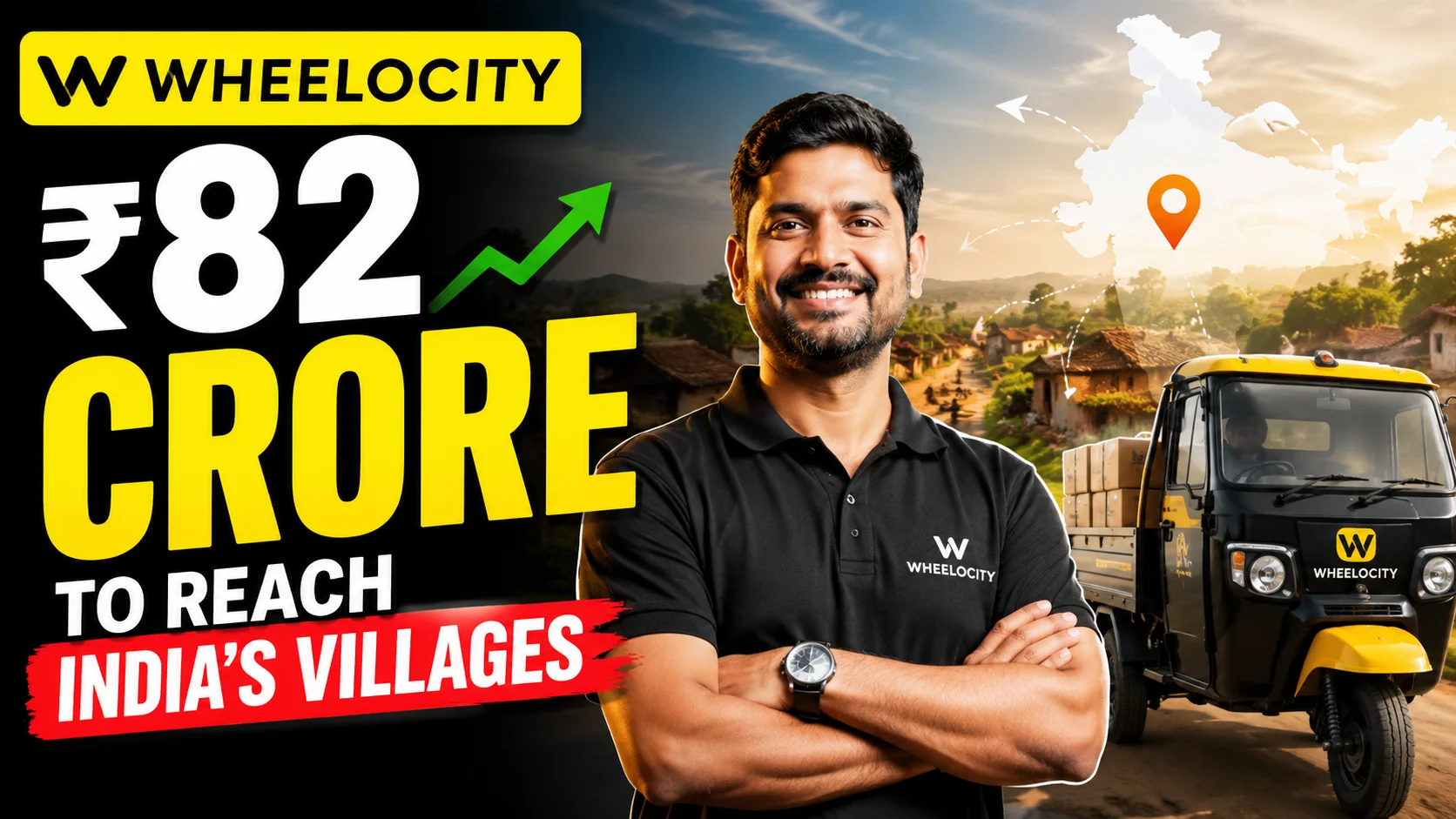
India’s rural economy is an untapped giant, yet millions of villagers still struggle to access fresh, affordable groceries due to heavily fragmented supply chains. Enter Wheelocity, a Chennai-based startup that recently secured ₹82 crore in funding to solve this very bottleneck. By combining digital ordering with physical electric carts, the company is bridging the rural-urban divide and taking the convenience of fresh grocery delivery directly to Bharat’s doorsteps.
The ₹82 Crore War Chest: Who is Backing the Vision?
While urban quick-commerce platforms battle over 10-minute delivery times in saturated metros, venture capital is increasingly eyeing the long-term potential and massive scale of rural markets. Wheelocity’s ongoing funding round—totalling ₹82.36 crore (roughly $8.5 million)—is a strong institutional vote of confidence in its technology-led distribution network.
According to recent filings, the capital injection was executed strategically across three distinct tranches:
- Institutional Heavyweights: An alternative investment fund managed by Elevar Equity (EE-FI) led the latest and largest tranche with an investment of ₹54.99 crore.
- Existing Backers: Marquee investors, including Lightspeed India Partners, Grand Anicut Fund 3, LS Opportunities Access Fund LP, and Magnum LLC, collectively contributed ₹16.32 crore.
- Angel Investors: A group of individual backers, such as VML Karthikeyan and Lakshmi Narayanan Senthilnathan, injected ₹11.05 crore earlier in the process.
This fresh capital follows their earlier $15 million Series A2 round in 2024, pushing Wheelocity’s total raised capital to more than $35 million. The funds will be heavily deployed to expand their commerce channels, bolster tech infrastructure, and scale last-mile delivery capabilities across underserved markets.
A Strategic Pivot: From Supplying Zepto to Serving Villages
Wheelocity didn’t start as a direct-to-consumer rural brand. Founded in 2021 by Selvam VMS, Senthil Kumar A, and Amresh Singh, the company originally operated as a B2B supply chain backbone for urban hyperlocal and e-commerce giants like Blinkit, Swiggy Instamart, and Zepto. They spent their early years mastering the complexities of logistics, hyperlocal delivery, and fresh food management for city dwellers.
However, in October 2023, the founders recognized a far bigger whitespace.
The traditional agricultural supply chain in India is notoriously fragmented, often involving multiple intermediaries before a vegetable reaches the end consumer. This multi-layered system not only inflates prices but also results in high wastage. Realising that their logistics expertise could eliminate these middlemen, Wheelocity made a bold pivot. They transitioned away from serving urban e-commerce platforms to building a direct-to-consumer model specifically tailored for rural realities.
The ‘Phygital’ Playbook: Bridging the Digital Divide
Selling to rural India requires a drastically different playbook than catering to urban millennials. To navigate the complexities of semi-urban and rural consumer behaviour, Wheelocity deployed a unique “phygital” (physical plus digital) model.
- Hybrid Purchasing Options: Recognizing the digital divide, Wheelocity allows tech-savvy rural consumers to place orders via a mobile app. Simultaneously, it deploys branded electric carts that serve as mobile physical storefronts, allowing other villagers to purchase produce directly at their doorsteps.
- Zero-Inventory Supply Chain: At the heart of their operation is a “flow-through,” pitstop-based supply chain. Wheelocity sources fruits and vegetables directly from farmers, moves them swiftly through localized distribution hubs, and ensures they reach consumers within 24 hours of harvest.
- Tech-Driven Efficiency: Technology replaces traditional, bulky warehousing. The startup leverages Artificial Intelligence (AI) for granular demand forecasting, route optimization, and real-time fleet tracking.
By delivering produce within a day of harvest, Wheelocity dramatically improves freshness while significantly curbing the food wastage that traditionally plagues agricultural logistics.
Impressive Scale and Rural Impact
Building a profitable logistics network in highly dispersed rural geographies is notoriously difficult due to fragmented demand and high distribution costs. Yet, Wheelocity’s metrics indicate strong initial traction.
Today, the startup’s footprint is expanding rapidly across India’s hinterlands:
- Consumer Reach: The platform currently serves more than 5 lakh households across over 3,300 villages.
- Employment Generation: The company has created direct livelihood opportunities by employing more than 1,500 rural workers.
- Green Mobility: Wheelocity’s last-mile delivery network operates entirely on electric vehicles, which helps keep operational costs strictly optimized for price-sensitive markets. Their EV fleet currently covers over 1 lakh kilometres every single day.
This approach does more than just sell groceries—it guarantees better price realization for local farmers and creates vital micro-entrepreneurship opportunities within village ecosystems.
The Road Ahead for Rural Commerce
Wheelocity’s successful ₹82 crore funding round proves that India’s next massive growth narrative will not be exclusively written in its metropolises, but in its villages. By leveraging AI, zero-inventory logistics, and electric mobility, the startup is successfully converting the logistical nightmare of rural distribution into a scalable, high-impact business model.
The Takeaway: As urban quick commerce reaches saturation, companies that solve real-world infrastructure gaps in Tier 3 towns and beyond will command the next wave of venture capital. Wheelocity’s journey from a B2B vendor to a rural commerce pioneer is a masterclass in reading the market and pivoting with purpose.
What are your thoughts on tech startups penetrating rural India? Share your perspective in the comments below or join the conversation on our social media channels!
Also Read Swish Lands $38M Series B: How a Bengaluru Startup is Winning the 10-Minute Food Delivery War