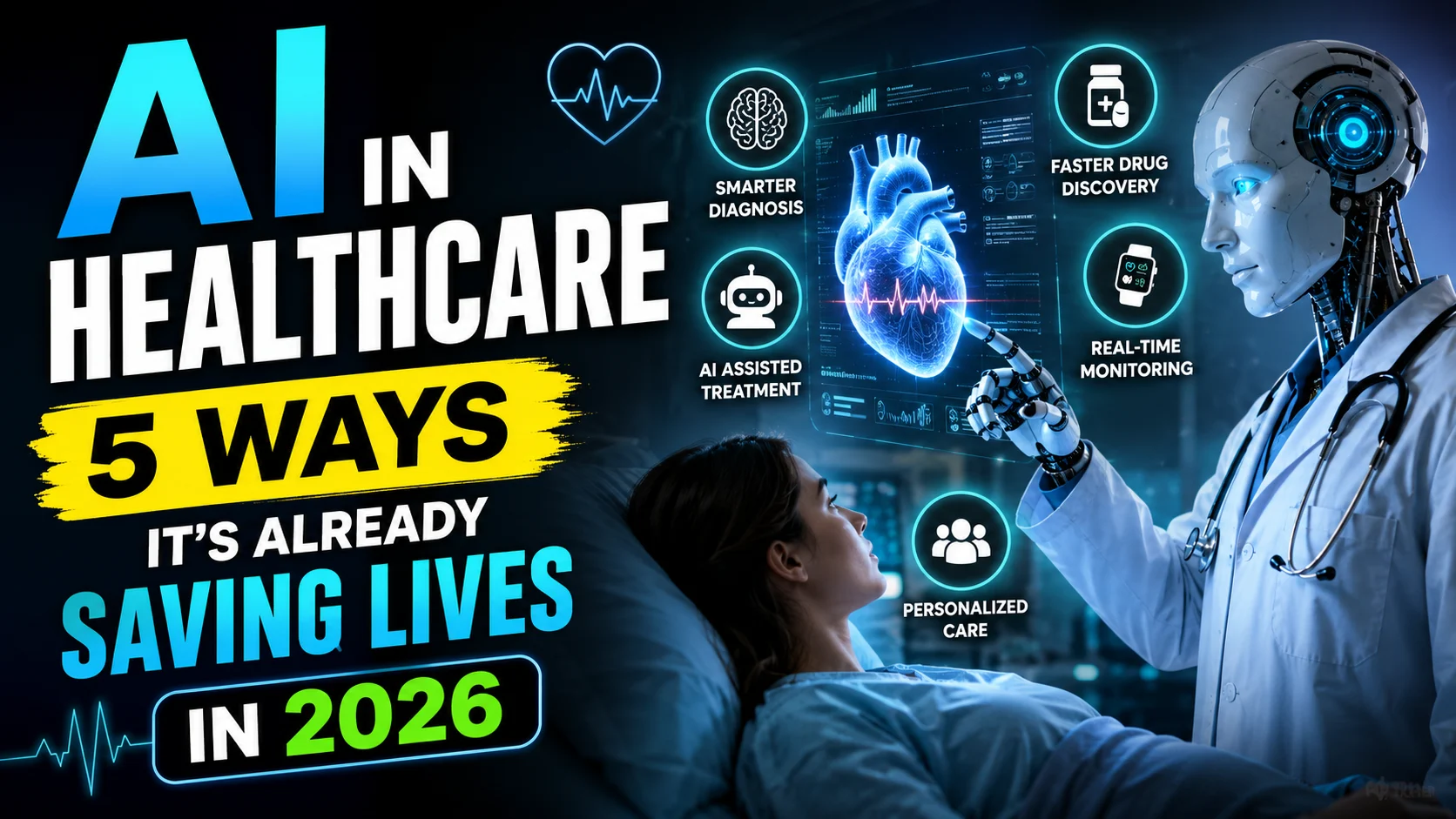
We are no longer waiting for the “future of healthcare”—it is already here. With over 500 AI-based devices now approved by regulatory bodies like the FDA, machine learning is fundamentally rewriting how doctors diagnose, treat, and manage diseases.
Here is a closer look at five real-world ways AI is actively saving lives in 2026.
1. Catching the Silent Killer: Sepsis Prediction
Every year, hundreds of thousands of hospitalized patients suffer preventable harm due to delayed diagnoses. Sepsis, an aggressive and often fatal immune response to infection, is notoriously difficult to catch early. Every hour of delayed treatment drastically reduces survival rates.
In a landmark shift, the healthcare industry is now leveraging AI to outpace this silent killer. Recently, an AI-powered software-as-a-medical-device (AI SaMD) known as the Sepsis ImmunoScore received marketing authorization from the U.S. FDA.By analyzing massive datasets from electronic health records in real-time, these AI-driven predictive models can flag high-risk patients hours before clinical symptoms escalate, giving doctors the crucial lead time needed to administer life-saving antibiotics.
2. Revolutionizing Radiology and Cancer Diagnostics
If there is one medical field completely transformed by AI, it is radiology. In fact, over 75% of the FDA’s approved AI-based medical devices are dedicated to radiological imaging.
For oncology, early detection is everything. AI algorithms are now capable of flagging early signs of lung cancer, breast tumors, and brain anomalies with unprecedented precision.The global market for AI in cancer diagnostics has surged to a $1.28 billion valuation in 2026, reflecting a massive shift in trust and adoption.
- Unmatched Precision: AI systems analyze CT scans, MRIs, and X-rays faster than the human eye, identifying microscopic anomalies that might be missed during a grueling 12-hour shift.
- Digital Pathology:Pharmaceutical giants like Roche are integrating dozens of advanced AI algorithms into digital pathology platforms to dramatically improve the speed and accuracy of cancer research and tissue diagnosis.
3. Advanced Cardiac Care and Intervention
Cardiovascular diseases remain a leading cause of global mortality, but AI is helping cardiologists intervene before a heart attack happens. Algorithms are now capable of analyzing single-rhythm electrocardiogram (ECG) strips to detect hidden arrhythmias or early-stage left ventricular dysfunction with accuracy rivaling top human specialists.
This technology is already reaching patients globally. For instance, in 2025, Kauvery Hospitals launched India’s first AI-driven Advanced Heart Failure Centre, integrating predictive analytics, IoT monitoring, and robotic surgery to provide hyper-personalized cardiac care.
4. Accelerating Drug Discovery and Personalized Medicine
Historically, bringing a new drug to market takes over a decade and costs an average of $1.3 billion, with a devastating 90% failure rate in clinical trials. AI is radically flattening this curve.
By modeling complex biological systems and simulating how molecular structures interact, machine learning is reducing the time required for early-stage drug development. Beyond discovery, AI is powering personalized medicine. By processing a patient’s genetic profile, electronic health records, and real-time biometrics from wearable devices, AI models can predict exactly how an individual will respond to a specific therapy—ensuring patients receive the right drug, at the right dose, on day one.
5. Curing Physician Burnout
While it may not sound as dramatic as robotic surgery, streamlining administrative tasks is quite literally saving lives. Incomplete medical histories and large caseloads inevitably lead to human error.
AI tools are taking over medical coding, billing, and clinical note-taking. By handling the exhausting data-management processes that contribute to widespread physician burnout, AI allows doctors and nurses to return their focus to where it belongs: the patient. When physicians aren’t exhausted by paperwork, their diagnostic accuracy improves, and patient care becomes far more empathetic and precise.
The Bottom Line
Artificial intelligence in 2026 is not about replacing human doctors—it is about augmenting them. It provides clinicians with a powerful co-pilot, capable of processing trillions of data points in seconds to catch what the human eye might miss. As the regulatory frameworks continue to adapt to these self-learning algorithms, the integration of AI into our medical infrastructure will only deepen.
What to do next: Take control of your own health data. Explore how your wearable devices, like smartwatches or fitness trackers, sync with modern AI health apps to monitor your biometrics. The next time you visit your doctor, don’t hesitate to ask how AI-assisted tools are being used in your routine screenings.
Also Read The Hidden AI Settings on Your iPhone You Should Turn On Today