Beyond the Traditional Credit Score
For decades, your financial credibility was boiled down to a simple three-digit number, like a CIBIL or FICO score, built on a handful of rigid variables. Traditional models primarily look at past defaults, outstanding debt, and credit utilization. While effective, they are inherently backward-looking and often fail to capture a consumer’s real-time financial health.
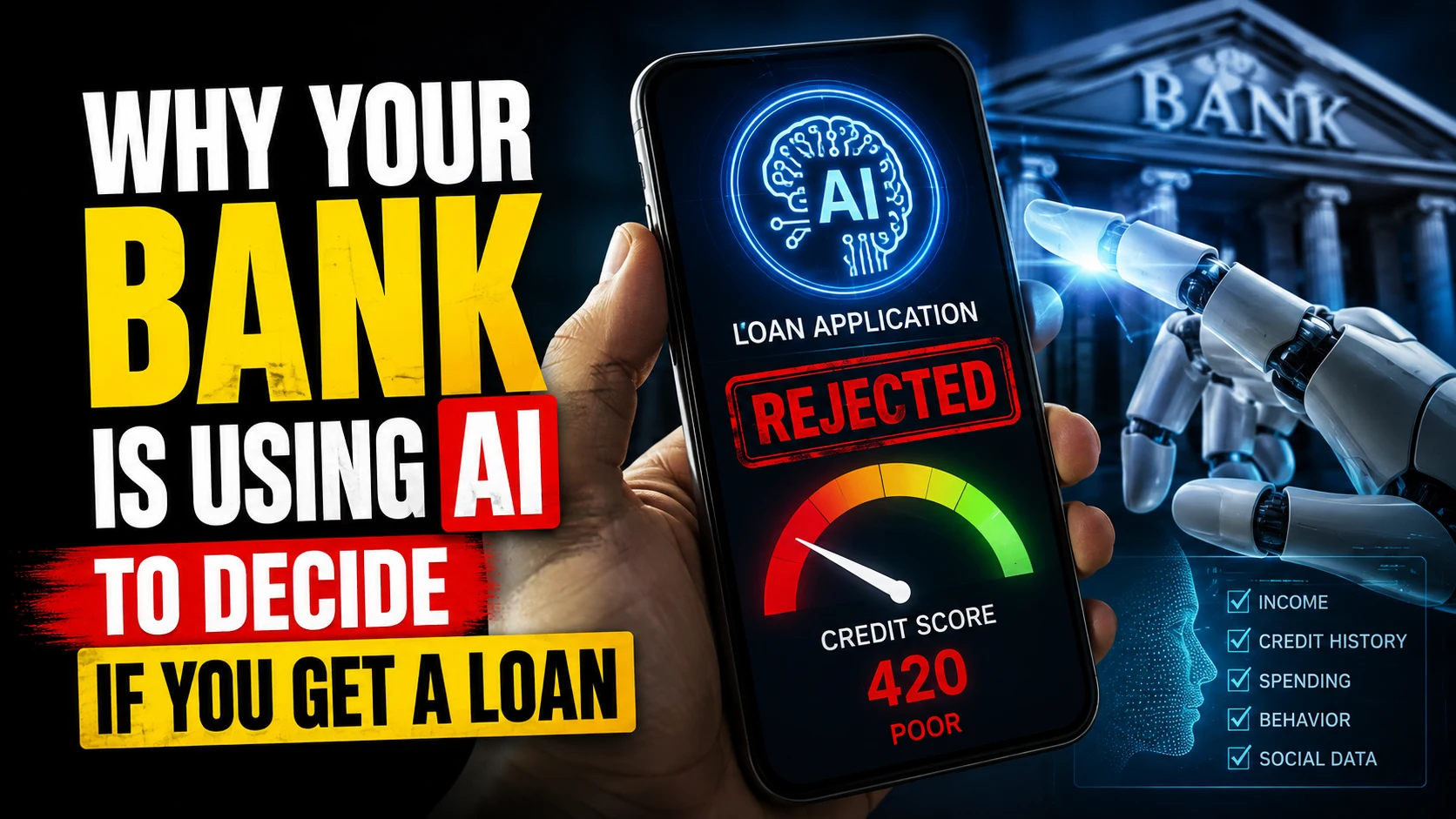
AI credit scoring flips this script. Modern AI algorithms—utilizing complex machine learning techniques like gradient boosting and neural networks—assess non-linear patterns in your financial behavior.Instead of just checking your standard credit bureau file, these models ingest massive amounts of “alternative data”.
This means the algorithm evaluates:
- Real-time cash flow and account balances
- Utility bill and rent payment consistency
- Telecom signals and digital footprint
- Behavioral data, such as how you interact with banking apps
By analyzing this broader set of data, AI creates a highly dynamic and comprehensive profile of your likelihood to repay a debt.
The Triple Benefit: Accuracy, Speed, and Inclusion
Why are banks so eager to hand the reins to algorithms? The broader AI in finance market is projected to surge to over $190 billion by 2030, driven by an urgent need for efficiency. For lenders, the technology delivers three massive advantages:
- Pinpoint Accuracy:Financial institutions using AI models report a 15% to 25% increase in their ability to accurately predict loan defaults. By capturing subtle warning signs that human underwriters might miss, banks can expand their lending portfolios while simultaneously lowering credit losses.
- Bringing the “Invisible” into the Fold:Millions of people globally are “credit invisible”—meaning their credit files are too thin to generate a traditional score.By analyzing alternative data, AI can safely approve loans for these marginalized applicants, driving financial inclusion and unlocking new customer segments.
- Hyper-Automation:The traditional 48-hour wait for a manual application review is becoming obsolete.AI drastically cuts processing times and reduces the need for manual underwriting by up to 60%, saving the global financial sector billions in operational costs.
The “Black Box” Problem and Algorithmic Bias
Despite its efficiency, AI-driven lending has a dark side. The most pressing concern for consumer advocates is algorithmic bias.
If an AI model is trained on historical data that contains systemic biases or discriminatory lending practices, it can silently replicate those inequalities at a massive scale. A machine does not have a moral compass; it simply looks for statistical correlations.
Furthermore, advanced neural networks often operate as a “black box.” The internal logic is so immensely complicated that even the bank’s own data scientists might struggle to explain exactly why an applicant was rejected. For consumers, being denied a mortgage or a business loan by an unexplainable machine feels deeply unfair and leaves them with no clear path to improve their standing.
Regulators Sound the Alarm
Governments and central banks are refusing to let algorithms run wild. Regulators want to ensure that AI does not introduce systemic credit risks or violate consumer protection laws.
- India’s Regulatory Push:The Reserve Bank of India (RBI) recently introduced new guidelines targeting the use of AI in credit assessments.The RBI’s framework emphasizes transparency, data privacy, and bias prevention, mandating that lenders must provide clear audit trails and customer notifications when algorithms are used to reject a loan application.
- European Scrutiny: Similarly, the European Central Bank (ECB) has ramped up its oversight. Recent ECB data shows a sharp increase in European banks using AI for credit scoring, prompting direct supervisory workshops to ensure strict compliance and model governance.
The Takeaway: How to Prepare for the AI Loan Officer
The era of the algorithmic loan officer is already here. While AI has the potential to make lending faster and fairer, it also means your entire digital financial footprint is constantly under the microscope.
Your action plan: Treat your overall digital financial hygiene with the same respect you give your credit score. Avoid frequent overdrafts, pay utility and subscription bills consistently, and maintain stable account balances. Because AI looks at the holistic, real-time picture of your cash flow, every digital transaction counts.
Next Steps: Have you noticed faster loan approvals or sudden credit limit changes on your banking apps? It might be AI at work. Review your bank’s privacy policies today to understand exactly what alternative data they are legally collecting to evaluate your financial health.
Also Read The Hidden AI Settings on Your iPhone You Should Turn On Today