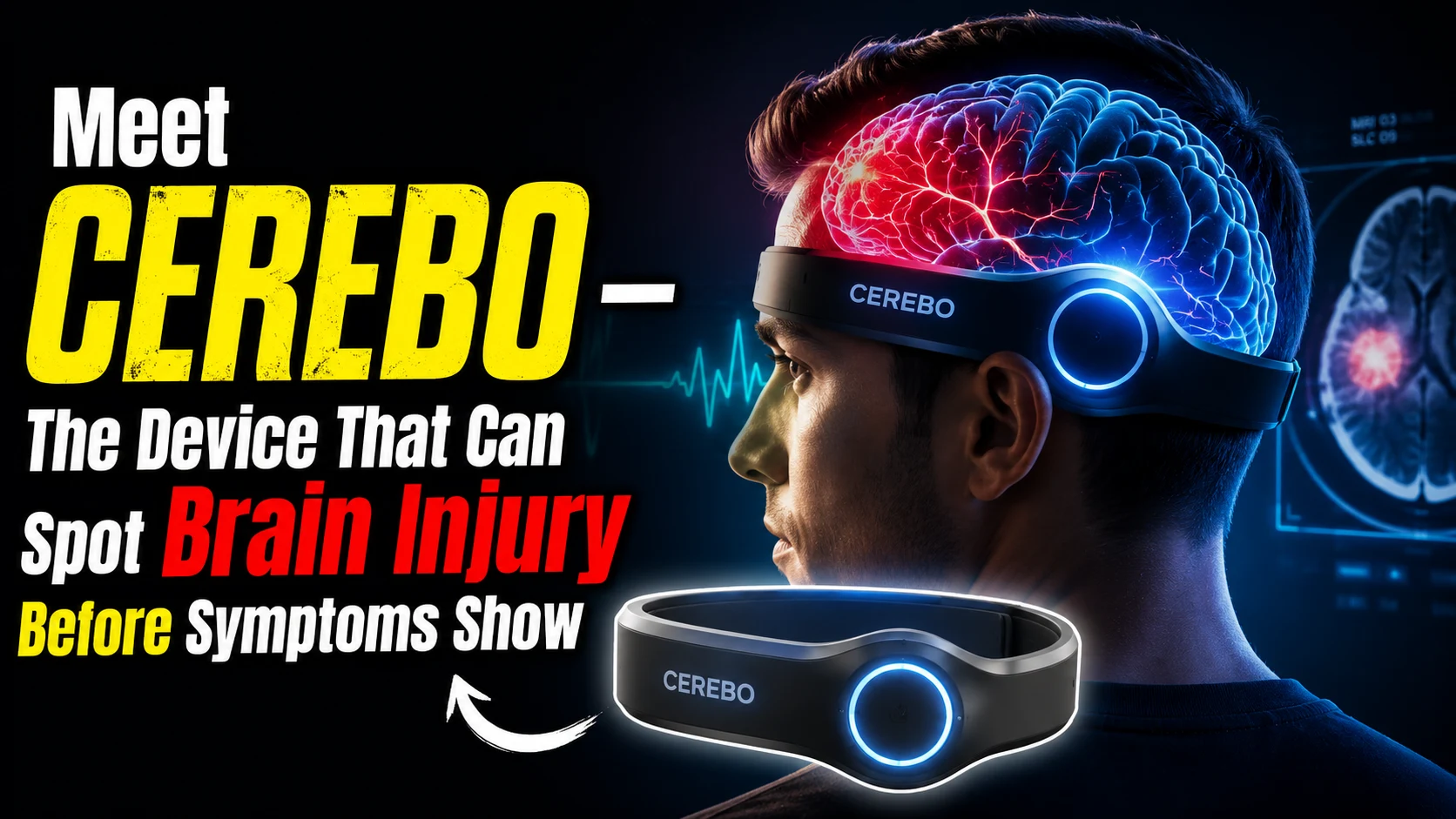
In the chaotic aftermath of a road accident or a nasty fall, the most dangerous injuries are often the ones you cannot see. A patient might walk away feeling perfectly fine, entirely unaware that a silent, potentially fatal bleed has started inside their skull. By the time symptoms like severe headaches, confusion, or vomiting appear, irreversible brain damage—or worse—may have already occurred.
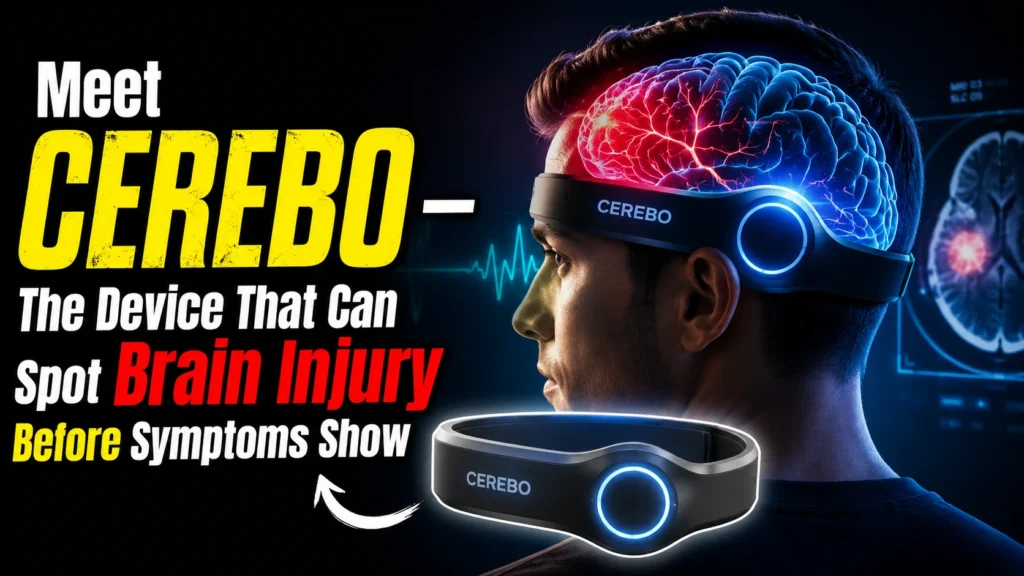
Enter CEREBO, a groundbreaking, hand-held device developed in India that is changing the narrative of traumatic brain injury (TBI) detection. By spotting intracranial bleeding and tissue swelling before a single symptom shows, this portable scanner is quite literally the difference between life and death.
The Silent Epidemic of Traumatic Brain Injuries
Traumatic Brain Injury is a staggering public health crisis. According to medical data, road traffic accidents account for roughly 60% of all TBIs, followed by falls and violence. The statistics are grim: over 100,000 TBI-related deaths are recorded annually in India alone, with nearly half of these fatalities occurring within the critical first two hours of the injury.
Traditionally, first responders and doctors have relied on the Glasgow Coma Scale (GCS) to assess a patient’s consciousness level. However, this method is subjective and highly prone to errors, particularly if the patient is in shock or intoxicated. The definitive alternative—a CT or MRI scan—is expensive, requires a highly controlled hospital environment, and emits radiation. In rural areas or directly at accident sites, waiting for a scan often consumes the “golden hour” of trauma care, leading to devastating long-term cognitive, physical, and emotional impairments.
What is CEREBO and How Does It Work?
Developed as a point-of-care triage tool, CEREBO is a battery-operated, highly portable scanner weighing just about 1 kilogram. But its compact size belies its extraordinary diagnostic capability.
The device leverages the science of Near-Infrared Spectroscopy (NIRS), combined with cutting-edge Machine Learning (ML) algorithms. When placed gently against the patient’s scalp, it shines harmless near-infrared light deep into the brain tissues—up to 3.5 cm deep. Since pooled blood absorbs this light differently than healthy brain tissue, the device can instantly detect the presence of intracranial hematomas (bleeding) as small as 2mL.
Crucially, the integrated machine learning algorithm interprets the data automatically, removing the need for an expert neurologist or radiologist at the scene. Within a minute, the device provides a clear, color-coded, and highly accurate result.
A Game-Changer for Rural Healthcare and Emergency Response
Because CEREBO doesn’t rely on complex imaging infrastructure, it is tailor-made for disaster response units, ambulances, and primary health centers in remote regions.
Dr. Rajiv Bahl, Director General of the Indian Council of Medical Research (ICMR), emphasized its potential during the device’s introduction: “TBI is a significant public health challenge, particularly in emergency settings. Traditional methods… are prone to errors and subjective interpretations, while imaging techniques demand specialised infrastructure and are cost-intensive. [CEREBO] enhances early TBI detection and significantly improves patient outcomes.”
For paramedics and rural healthcare workers, the learning curve is remarkably flat. It takes just 30 minutes of training for even an unskilled healthcare worker to learn how to operate the device accurately and effectively.
Key Features That Make CEREBO a Medical Breakthrough
What separates CEREBO from traditional neuro-diagnostic methods? Here is a look at its standout features:
- Pre-Symptomatic Detection: It identifies delayed hemorrhages and internal bleeding even in completely asymptomatic patients, ensuring early intervention before neurological decline begins.
- 100% Radiation-Free & Non-Invasive: Unlike standard CT scans, CEREBO uses safe optical light. It can be used repeatedly for continuous monitoring and is entirely safe for infants, children, and pregnant women.
- Rapid Results: In emergency medicine, every second counts. CEREBO delivers its verdict in under a minute.
- High Portability: Running on battery power, it brings the “hospital to the patient,” whether at a highway accident site, a sports field, or a rural clinic.
- Cost-Effective Triaging: By rapidly identifying patients who actually need expensive CT scans versus those who are safe to go home, it drastically reduces unnecessary healthcare costs and hospital bottlenecks.
A Triumph of Indigenous Innovation
CEREBO is a shining example of innovation in cutting-edge medical technology. The device is the culmination of a collaborative effort involving the Indian Council of Medical Research (ICMR), the Medical Device and Diagnostics Mission Secretariat (MDMS), AIIMS Bhopal, NIMHANS Bengaluru, and Bioscan Research.
By successfully marrying optical physics with modern AI, these innovators have created a tool that has already completed clinical validation and is currently poised for wider global adoption.
The Takeaway: Equipping the Frontlines
Traumatic brain injuries do not wait for a hospital visit, and neither should their diagnosis. Devices like CEREBO are revolutionizing emergency trauma care by democratizing access to rapid, life-saving diagnostics. As medical councils urge state governments and private hospitals to deploy these scanners across their emergency networks, the focus must shift to rapid procurement and widespread distribution.
Take Action: If you are a healthcare professional, an emergency responder, or a policy advocate, it is time to champion the integration of portable diagnostic tech in your local medical infrastructure. Better triage saves lives—share this breakthrough to raise awareness about the future of brain injury care.
Also Read Bioscan Research The Mumbai Startup Detecting Brain Injuries Without Surgery